Collaborative robots, known as cobots, are transforming industrial automation. Unlike traditional robots, cobots are designed to work alongside people without cages or safety barriers. They are safe, easy to use and highly versatile. That’s why more and more companies are choosing them to automate tasks without losing flexibility.
But what exactly is a cobot and how can it benefit your company?
What is a cobot?
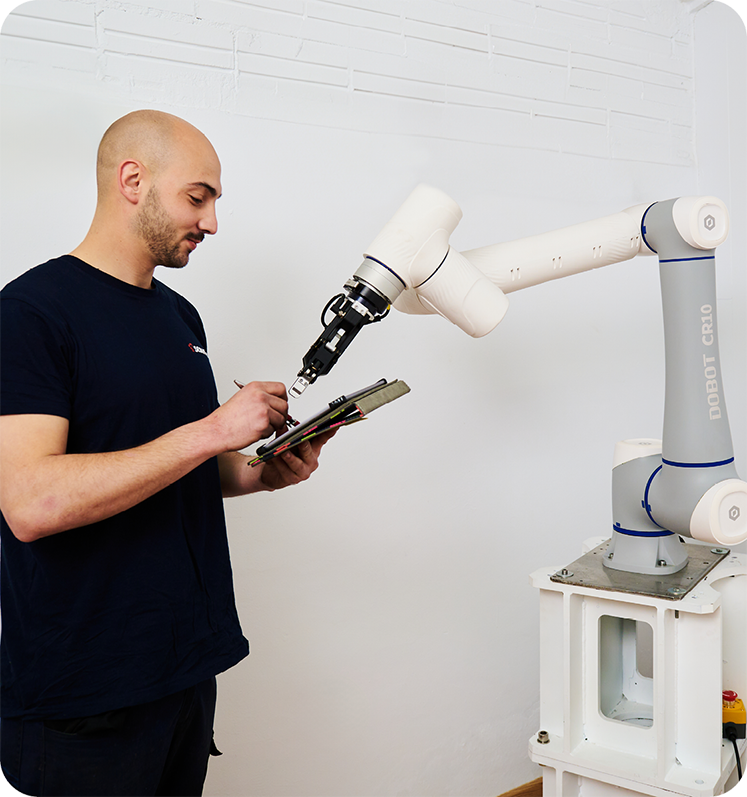
A cobot is a type of industrial robot designed to collaborate safely with humans in shared environments. Unlike conventional robots, which typically operate in isolated areas for safety, cobots incorporate sensors, advanced software and force limitations to interact safely with people.
Cobots, like industrial robots, are used to perform repetitive, precise or physically demanding tasks, allowing operators to concentrate on higher value-added tasks.
How does a cobot work?
A cobot is powered by a combination of:
- Sensors and artificial vision: detect obstacles, people or changes in the environment.
- Intuitive software: allows tasks to be programmed using simple interfaces or even taught by hand.
- Force and stop control: limits the power applied to prevent damage in case of accidental contact.
- Certified safety systems: comply with standards such as ISO/TS 15066.
These factors make cobots safe, easy to implement and scalable to production needs.
Advantages of cobots
- Safety: They can work without cages or barriers.
- Easy integration: No specialised programmers required.
- Profitability: Rapid return on investment, even in small companies.
- Flexibility: Adaptable to multiple tasks and sectors.
- Productivity: They work continuously, without breaks.
Collaboration at its core
When the world of collaborative robotics began, everyone wondered what a cobot was and each brand developed its own applications separately. At SEMAPRO we wanted to go further and decided to put them to work together, to collaborate with each other, as we believe that this is the true essence of technology: collaboration to achieve better results.
Real-life applications of cobots
Cobots are already present in a wide range of industries:
- Automotive: assembly, bolting, visual inspection.
- Electronics: component handling, precision soldering.
- Food: packaging, labelling and palletising.
- Logistics: picking and classification of products.
- Medicine and laboratory: analysis, dosage and sample handling.
Thanks to their versatility, cobots are suitable for low volume or high variability processes.
Is a cobot right for my company?
According to the International Federation of Robotics’ World Robotics report, cobots have shown steady growth in adoption, reaching 10% of the industrial robot market by 2022.
This boom is due to its ability to adapt to changing environments and add value in tasks where traditional automation is not feasible.
Cobots are a good choice for:
- Repetitive or ergonomically hazardous tasks.
- Small to medium batch production.
- Companies that want to get started in automation without large investments.
- Processes that require flexibility and frequent changes.
If your company needs to improve productivity without compromising security, then a cobot may be the perfect solution.
FAQ: Frequently asked questions about Cobots
What is a cobot and how is it different from an industrial robot?
A cobot, or collaborative robot, is a type of robot designed to work safely alongside people. Unlike traditional industrial robots, cobots do not require cages or barriers, as they incorporate sensors and safety systems that allow them to detect and avoid collisions with humans.
What tasks can a cobot perform?
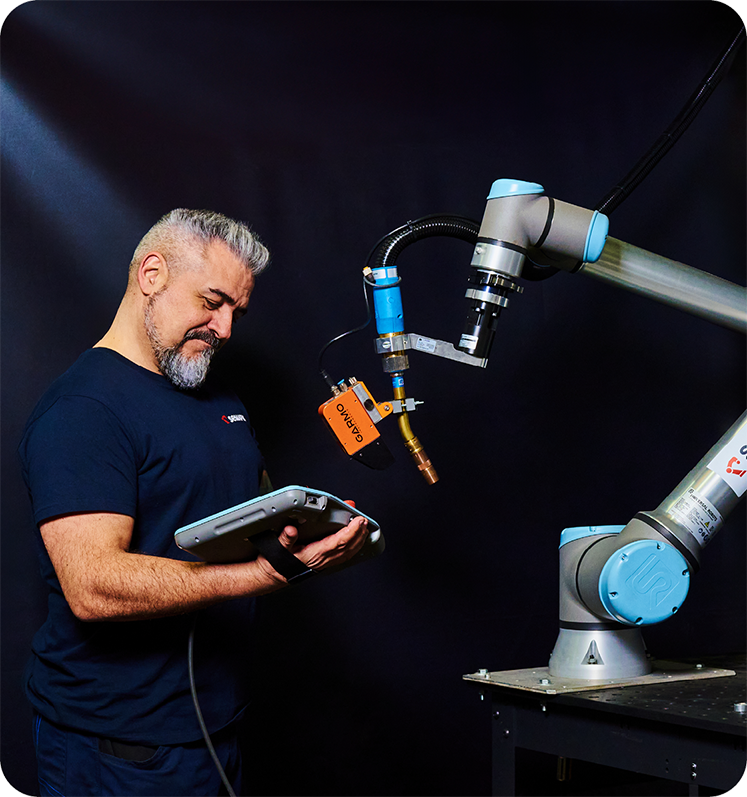
Cobots can perform tasks such as bolting, assembly, welding, packaging, material handling, quality inspection and more. They are especially useful in repetitive, hazardous or physically demanding processes.
Is it safe to work with cobots?
Yes, cobots are designed with multiple safety measures, such as force sensors, speed and stop limitations, and compliance with standards such as ISO/TS 15066. This makes them safe for environments shared with human operators.
How much does a cobot cost?
The price of a cobot can vary depending on many factors such as: model, manufacturer and application. At Semapro we have expert technicians who will be happy to advise you on how to choose the one that best suits your needs.
What maintenance does a cobot need?
The maintenance of a cobot is simple and less intensive than that of a traditional robot. Generally, sensors, software and mechanical condition are checked. At Semapro we offer technical support and specialised maintenance to ensure optimal performance.
Do I need technical knowledge to use a cobot?
Not necessarily. Many cobots are designed to be programmed intuitively, including through graphical interfaces or manual guidance. Semapro also offers training to facilitate adoption in any company.
Can I integrate a cobot into my current process without major changes?
Yes, one of the main advantages of cobots is their ease of integration. They fit easily into existing production lines and allow automation without the need to drastically modify the working environment.
Automate your business with Cobots
Cobots represent a natural evolution in industrial automation: they are accessible, safe and highly efficient. At Semapro we help you take the step towards this technology with collaborative robots adapted to the needs of your company.
Regardless of the size of your company, our team can help you implement cobots in your day-to-day operations, optimise processes and reduce costs quickly and efficiently.
Are you ready to make the leap to collaborative automation?
We advise you without obligation!
360° automation: what SEMAPRO can do for your company
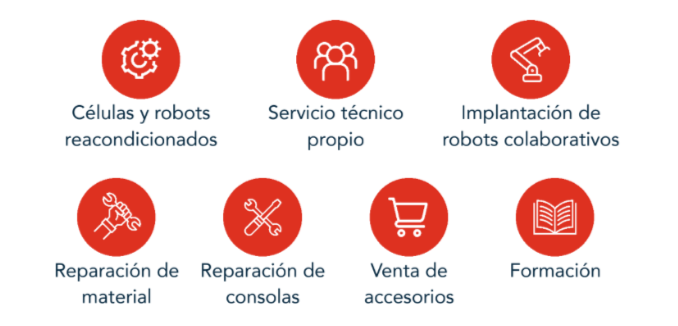
At SEMAPRO we don’t just install collaborative robots. We are specialists in integral industrial automation, so we offer a full range of services for your company to make the leap to Industry 4.0 with confidence and real results.
Write to us at semapro@semapro.es or contact us directly via WhatsApp Business:
Follow us on social media and find out more about how we work: